
Artificial Intelligence (AI) is one of the most advanced technologies shaping the digital world today. In simple terms, Artificial Intelligence refers to computer systems that can perform tasks that normally require human intelligence. These tasks include learning from data, recognizing patterns, making decisions, and solving complex problems.
In 2026, AI is being widely used across industries such as healthcare, finance, marketing, cybersecurity, and e-commerce. Professionals interested in AI often begin by learning data analytics and data science, which form the foundation of artificial intelligence systems. Programs like the Data Analytics Course Training in Hyderabad help learners build strong skills in data analysis, visualization, and business intelligence.
Definition of Artificial Intelligence
Artificial Intelligence is a branch of computer science that focuses on creating intelligent machines capable of performing tasks such as reasoning, learning, and decision-making. AI systems analyze large amounts of data and use algorithms to identify patterns and make predictions.
Today, AI technologies power many tools we use daily, including voice assistants, recommendation systems, chatbots, and automated business processes.
Key Components of Artificial Intelligence
AI systems are built using several technologies that work together to process information and improve performance over time.
- Machine Learning: Allows systems to learn from data without explicit programming.
- Natural Language Processing (NLP): Helps machines understand human language.
- Computer Vision: Enables machines to recognize images and objects.
- Robotics: Combines AI with physical machines to automate tasks.
Many professionals develop these skills through advanced programs like the Best Data Science Course Training in Pune, which focuses on machine learning, predictive analytics, and artificial intelligence technologies.
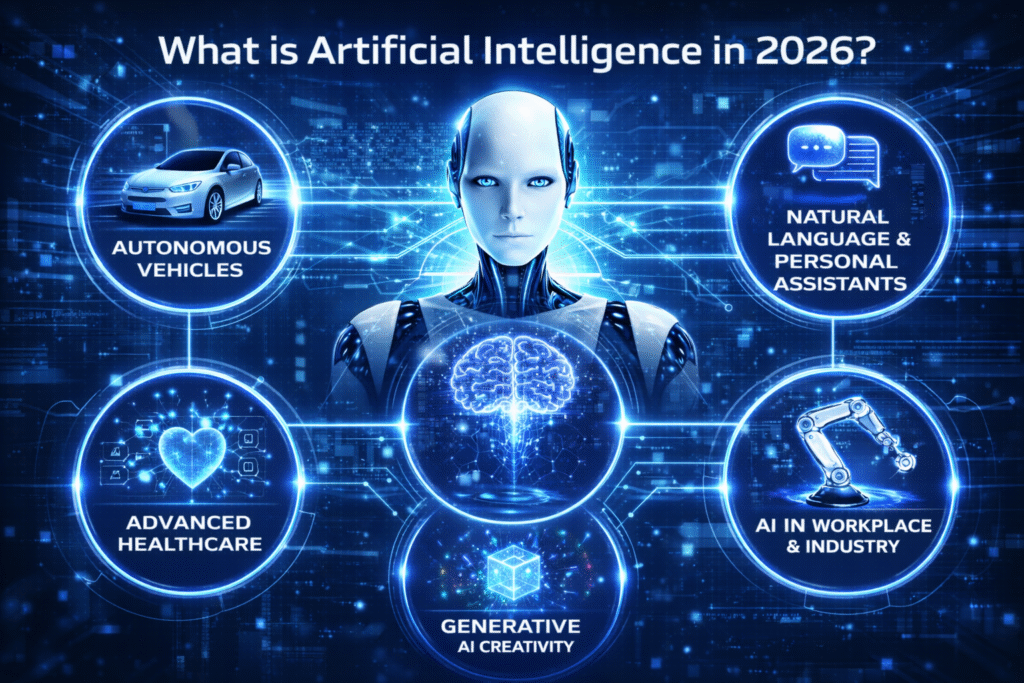
Applications of Artificial Intelligence in 2026
Artificial Intelligence is transforming industries and improving efficiency across many sectors.
Healthcare
AI helps doctors diagnose diseases, analyze medical images, and develop personalized treatment plans.
Finance
Banks use AI for fraud detection, automated trading, and risk management.
E-commerce
Online shopping platforms use AI to recommend products based on customer preferences and purchase history.
Transportation
AI powers autonomous vehicles, smart traffic systems, and predictive maintenance technologies.
Why AI Skills Are Important in 2026
The demand for AI professionals is growing rapidly as companies invest heavily in automation and data-driven technologies. Professionals with skills in analytics, machine learning, and programming have excellent career opportunities in the technology industry.
Many learners explore industry insights and student experiences shared on ONLEI Technologies, ONLEI Technologies, and ONLEI Technologies to understand how practical training programs help build careers in data analytics and artificial intelligence.
Career Opportunities in Artificial Intelligence
With the rapid growth of AI technology, several high-demand career roles have emerged.
- Artificial Intelligence Engineer
- Machine Learning Engineer
- Data Scientist
- AI Research Analyst
- Data Analyst
You can also explore more learner feedback and training insights on ONLEI Technologies.
Conclusion
Artificial Intelligence in 2026 is transforming how businesses operate and how people interact with technology. From automation and predictive analytics to smart decision-making systems, AI is becoming an essential part of the digital economy. Learning AI-related technologies such as data analytics, machine learning, and data science can help professionals build a successful and future-ready career in the rapidly growing technology industry.
